Mexico City's Azteca Stadium: A World Cup Legend
The Estadio Azteca makes history again — becoming the only venue on earth to host three FIFA World Cups.
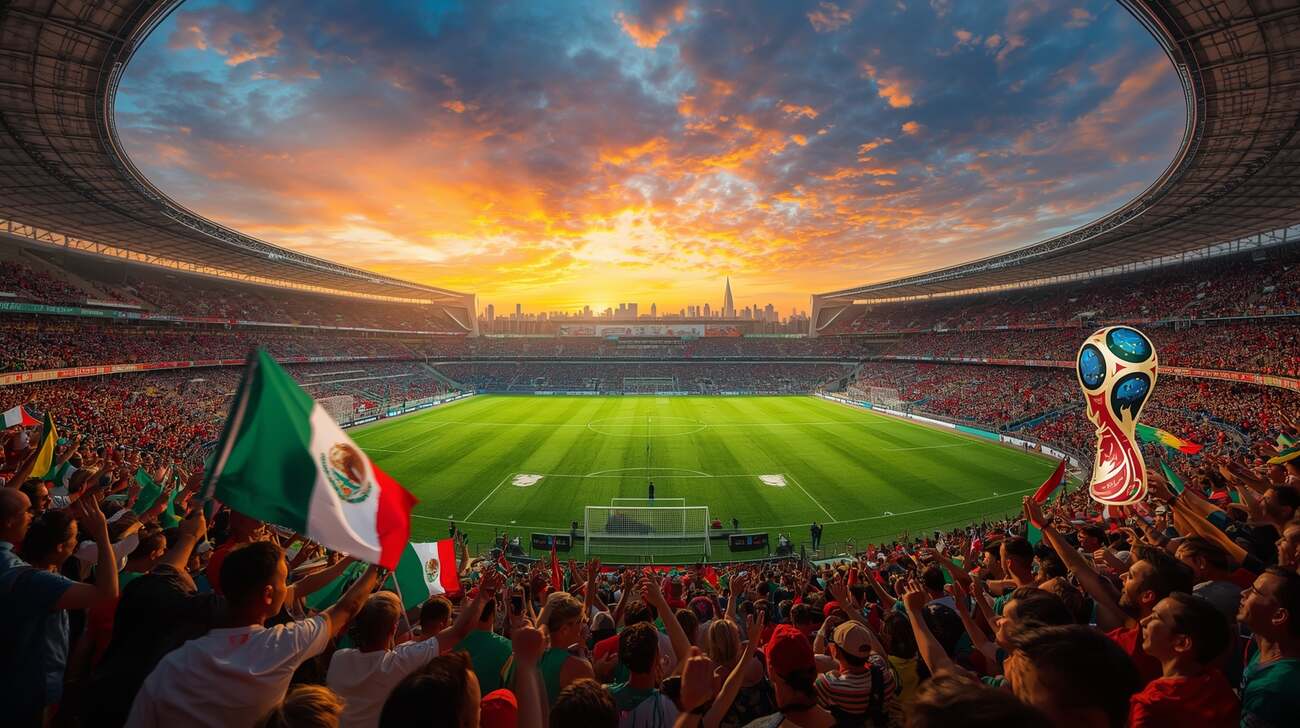
Few sporting venues on earth carry the weight of history that Estadio Azteca does. Perched at 2,200 metres above sea level in the southern reaches of Mexico City, this cathedral of football has been the stage for some of the most iconic moments in the history of the beautiful game. Now, after a massive €110 million renovation, it is preparing to write yet another unprecedented chapter — becoming the only stadium in history to host three FIFA World Cups and three opening matches.
🏟️ A Three-Time World Cup Host
No other stadium on the planet can claim this distinction:
| Year | Tournament | Notable Matches |
|---|---|---|
| 1970 | FIFA World Cup Mexico | Final: Brazil 4–1 Italy • "Game of the Century" semi-final |
| 1986 | FIFA World Cup Mexico | Final: Argentina 3–2 West Germany • "Goal of the Century" quarter-final |
| 2026 | FIFA World Cup USA/Mexico/Canada | Opening match of the entire tournament |
The Azteca is also the only stadium where both Pelé (1970) and Diego Maradona (1986) lifted the World Cup trophy — a fact that alone makes it sacred ground in football history.
⚽ The Moments That Define It
1970 — "The Game of the Century"
Before the famous final, the Azteca hosted what many consider the greatest match ever played: the semi-final between Italy and West Germany on June 17, 1970. Italy won 4–3 in extra time, with an astonishing five goals scored after the 90th minute. Franz Beckenbauer famously played with his arm in a sling after dislocating his shoulder, as West Germany had already used all their substitutions. It remains one of football's most dramatic spectacles.
1970 — Brazil's Crowning Glory
The 1970 World Cup final at the Azteca between Brazil and Italy (4–1) is widely considered the greatest World Cup final of all time. Pelé opened the scoring with a towering header, and the samba football on display that afternoon has never been surpassed. Carlos Alberto's thunderous strike to seal the victory is still regarded as one of the finest team goals ever scored. Brazil's third World Cup title earned them the right to keep the Jules Rimet Trophy permanently — and the Azteca was where they claimed it.
1986 — The Hand of God & The Goal of the Century
On June 22, 1986, the Azteca became the backdrop for the two most famous moments in football history — both within the same match, both courtesy of Diego Armando Maradona.
In the quarter-final against England, Maradona first punched the ball past goalkeeper Peter Shilton — the infamous "Hand of God" — a blatant handball unseen by the referee. Just four minutes later, he produced the polar opposite: a mesmerising 60-metre solo run from his own half, beating five England players before slotting the ball into the net. FIFA officially named it the "Goal of the Century" — and it happened right here, on the Azteca turf.
Argentina went on to win the 1986 final at the Azteca too, beating West Germany 3–2, with Maradona providing the decisive pass for Jorge Burruchaga's winning goal.
1985 — Surviving the Earthquake
The stadium's resilience is part of its legend. On September 19, 1985, a devastating 8.0-magnitude earthquake struck Mexico City, killing over 10,000 people and causing widespread destruction. The Azteca suffered significant damage. Yet it was rebuilt and restored in time to host the 1986 World Cup less than a year later — a testament to Mexican determination and the stadium's importance to the nation's identity.
🔧 The €110 Million Transformation for 2026
The Azteca closed its doors in May 2024 for the most ambitious renovation in its 60-year history. The project, costing approximately 2 billion Mexican pesos (€110M / $150M+), elevates the stadium to FIFA's highest modern standards while carefully preserving its iconic, intimidating character.
What's New
| Feature | Details |
|---|---|
| Capacity | Expanded to a staggering 90,000 spectators, solidifying its status as a colossal venue. |
| Roof | A state-of-the-art new roof structure outfitted with photovoltaic solar panels for sustainable energy. |
| Screens & Tech | Installation of over 2,000 square metres of high-resolution LED screens, plus Wi-Fi 6 connectivity. |
| Exterior | An extensive LED lighting system wrapped around the facade to dynamically illuminate the Mexico City skyline. |
| Facilities | Rebuilt dressing rooms, VIP suites, expanded press areas, and upgraded restrooms. |
| Accessibility | Lower stand demolition and rebuild to ensure flawless sightlines for every single seat. |
Grand Reopening
The stadium is set to reopen in March 2026, acting as a massive test event ahead of the World Cup. During the 2026 tournament, the venue will be officially referred to as "Estadio Azteca Mexico City" per FIFA naming conventions.
📊 Stadium at a Glance
| Detail | Info |
|---|---|
| Full name | Estadio Azteca |
| FIFA name (2026) | Estadio Azteca Mexico City |
| Location | Coyoacán, Mexico City, Mexico |
| Opened | May 29, 1966 |
| Capacity (2026) | 90,000 |
| Altitude | 2,200m (7,200 ft) above sea level |
| Surface | Premium hybrid grass |
| Renovation cost | ~€110M ($150M+) |
🌡️ The Altitude Factor
At 2,200 metres (7,200 feet) above sea level, the Azteca presents a unique physiological challenge. The thinner air at altitude means:
- Reduced oxygen availability — players tire faster and recovery between efforts is significantly slower.
- The ball travels differently — shots fly faster, free-kicks dip less predictably, and goalkeepers must rapidly adjust their timing.
- Visiting teams need acclimatisation — arriving 3–5 days early is essential, but even then, the physical toll is enormous.
For Mexico's national team, this altitude is home advantage elevated to a science. They've used it as a weapon for decades. Expect tactical adjustments, earlier substitutions, and potentially more extra-time exhaustion in Azteca matches.
🇲🇽 The Historic 2026 Opening Match
The Azteca has been awarded the singular honour of hosting the entire tournament's opening match on June 11, 2026 — officially making it the first stadium ever to host three World Cup opening matches (having also hosted the openers in 1970 and 1986).
This is a fitting tribute to Mexico's profound contribution to World Cup history. The atmosphere inside a packed Azteca, with 90,000 fans creating a wall of sound at 2,200 metres, will be one of the most electrifying and intimidating environments in the history of the sport.
Why It Matters
The Estadio Azteca isn't just a stadium — it's a living monument to football itself. It is where Pelé became eternal. Where Maradona became a god. Where an earthquake-scarred nation rebuilt and hosted the world. And now, at 60 years old and freshly renovated for the modern era, it stands ready to create new legends.
Every fan who steps inside in 2026 will be walking on sacred ground. ⚽🏆